From The ED’s Desk About Us
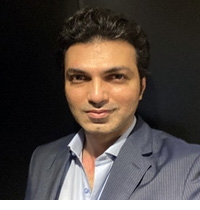
Dear Shareholders,
According to the IMF (International Monetary Fund) and World Bank reports, the global economy is entering a phase of “weak but stable” growth, largely defined by its resilience against a background of geopolitical uncertainty. The number one risk to business as identified by the World Economic Forum was “geo-economic confrontation”. This refers to the weaponization of economic tools by major powers. We have seen this play out with the US, China, and other countries in the recent past. Despite this, world GDP growth is expected to be around 3% for the coming year. As per World Bank estimates India is expected to remain the fastest growing major economy at around 6.4-6.6%, while the RBI maintains a more optimistic outlook of 7.4% for the current fiscal year.
The Transformer business registered a solid topline growth of 24% over last year. The unexecuted order book has grown by 40% and we have achieved highest production and dispatch statistics. We have been focusing on various aspects of our operations and have been able to improve productivity through various initiatives. As you may be aware, we are in the midst of a large expansion and all efforts are underway to ensure that this is completed before the end of this year. We are proud to inform you that we have successfully designed, manufactured, tested, supplied, and commissioned our first 400kV transformer earlier this year. Subsequently many more orders have followed in this segment. Our focus will be to further strengthen market share and serve the entire range of transformers that make up this vertical. The division has also received its first order for ester oil transformers from a prestigious customer. The business environment has thrown up a number of challenges and supply chains have been deeply affected. Material price volatility has also been difficult to work with. These issues have affected our margins. We have put in place various systems to deal with these challenges the best we can.
The Motor division grew by 12.5% in rupee terms over the previous year. The medium voltage and railways business have had substantial success growing by over 100%. We have achieved highest dispatches, production, and billing for the fiscal year. Margins in the business have been under pressure due to the high level of competitiveness prevalent in the market. We received an important traction motor order from the Indian Railways and hope to build on this in future. Demand for ethanol plants in India has gone up substantially in the recent years and we have done a good job in securing a high market share with respect to the requirement of motors for this industry. The IE4 range of induction motors has been launched and efforts to increase our presence in this segment are ongoing. Another area of focus has been HVAC (Heating, Ventilation, and Air Conditioning). Our product range in this area has grown substantially and with a few more additions we will soon be able to serve the entire market. Passing on inflated raw material prices to the customer is a challenge since prevailing list prices are losing their relevance sooner than expected. Our design optimization project is moving smoothly, thus we should see benefits in the near future. These efforts should reflect in our bottom line and we look forward to seeing the results.
Our Projects business has registered 37% year on year growth. Order execution has been of a high standard with on time and within budget being the hallmark of our performance. Price competition for projects has been fierce this past year and we have had to rethink our cost structure to sustain a steady level of order booking. That said we continue to receive repeat orders from marquee names in the industry. The next phase of growth will come from larger sized projects that we have been targeting. We will also focus on booking 400kV projects as this is a large market that we have not so far addressed.
In the Drives and Automation division growth was flat. The initiative to localize the manufacture of components of drives is ongoing and we should see benefits of this soon. The Euro has appreciated about 17% year on year. This has severely impacted our margins in this business. We are doing our best to mitigate this effect. While plastics remains our predominant market segment, we are working to increase market share in other segments. Our continued success in e-mobility is encouraging and various orders are under execution. The e-mobility segment is growing at a rapid rate, hence we will use the benefits of the PLI scheme and localization to pass on cost benefits to the customer. Metals, printing and packaging, are the new verticals we will focus on.
The Magnet Technology Machines division grew around 3% this fiscal year. This division has been severely impacted with the ongoing trade war and geo-economic issues. Specific grades of magnets are still difficult to obtain. Industry has found workable solutions in the meantime. We have significantly improved our market reach in the domestic gearless machines market. Thus we expect an increase in volume in the near future. Initiatives in supply chain optimization and inventory management have yielded results.
Christine Lagarde, ex head of the IMF and European Central Bank, recently remarked that the global economy is “navigating turbulent waters”. Short term geo-political swings, inflationary shocks, currency fluctuations, and volatility, have become the norm in the last few years. As the US shakes up the global economic order that it shaped after the second world war, we can expect that many more surprises will follow. While the economy of the US has been surprisingly sturdy, Europe has been the laggard, and in the Chinese economy growth has been muted. There are bound to be repercussions as the tariffs start kicking in all across the US. So this promises to be an eventful year ahead.
In India the economy has been fairly resilient despite a darkening global sky. Inflation has been in check and the RBI has held rates steady. However, higher energy prices and disrupted supply chains weigh heavily on economic activity. The capex cycle is also not where it should be. For India to strengthen economically it is imperative to boost private sector led growth. We must take many more measures to vastly improve the ease of doing business to enable this to happen. Even if the war in the Middle East is halted, it will take some time before supply chains normalize and the inflationary impact is digested by the market. Thus the next few quarters for corporate India will likely be challenging.
As always we remain optimistic and look to the future.
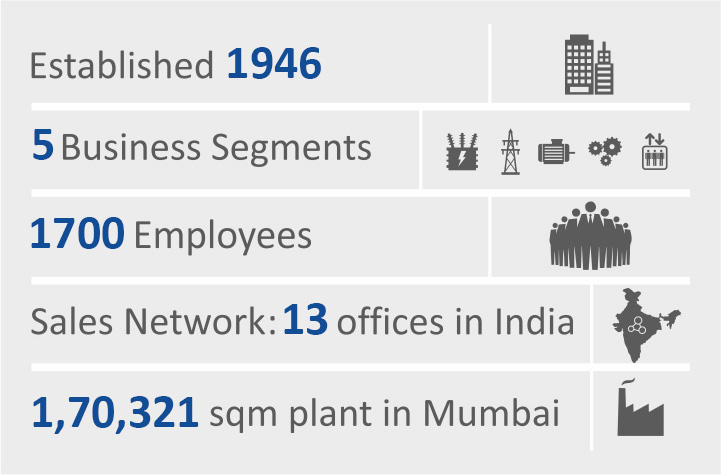
Bharat Bijlee by the Numbers
Financial Results
Awards & Recognition